
Introduction
Today as I write this, on Wednesday 12th August 2026, the United Kingdom was set to view the closest eclipse to totality since 1999. This is an awesome event no doubt, but not one that I really planned for. I had heard about this eclipse probably days later than I should have -- i've actually been much more excited about the meteor showers scheduled for tonight at around 2am! But, with a nice park with good views out west not that far from where I live, I thought i'd go and give it a watch anyway.
This eclipse shouldve been brilliant, why wasn't it?
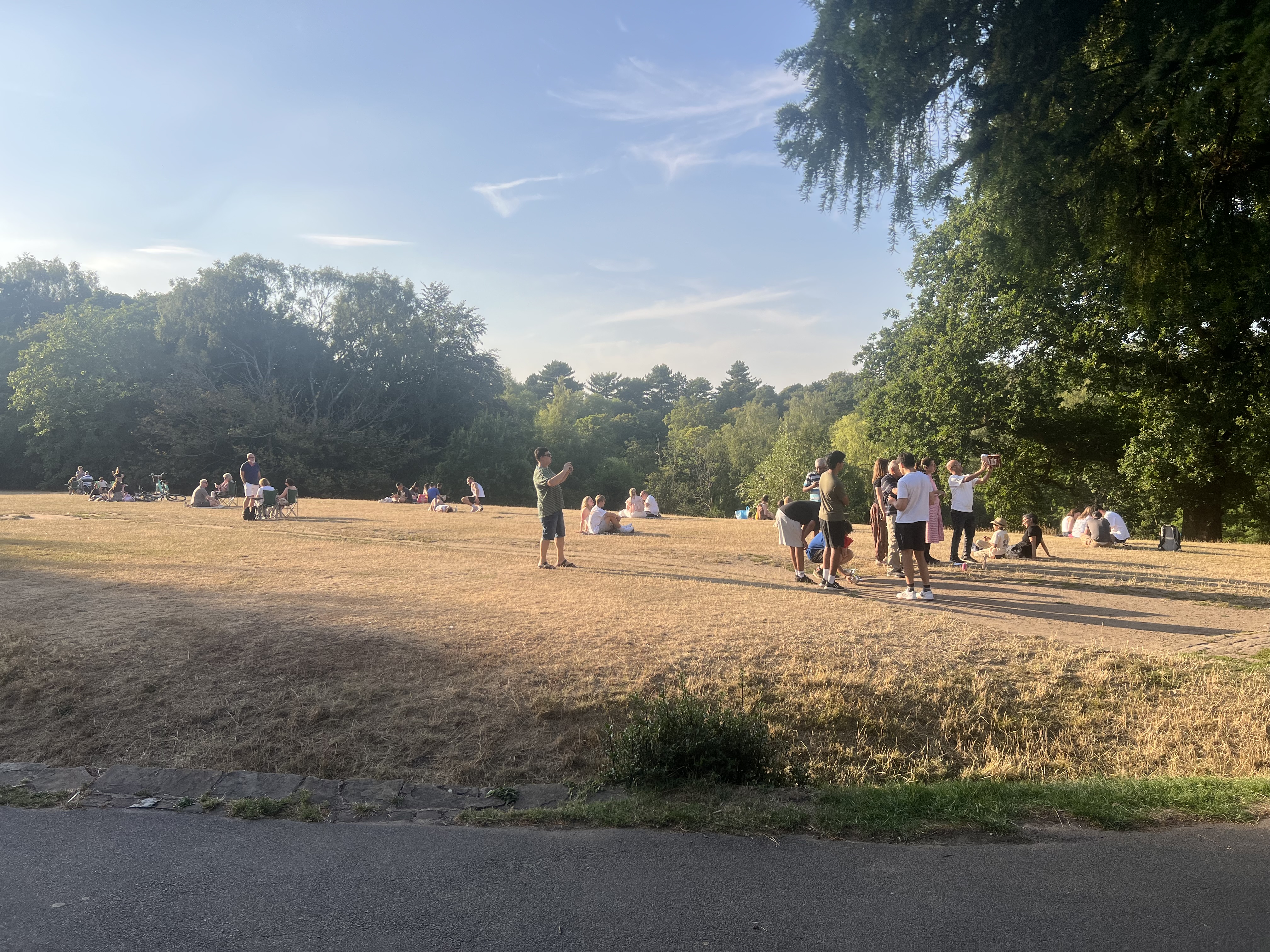
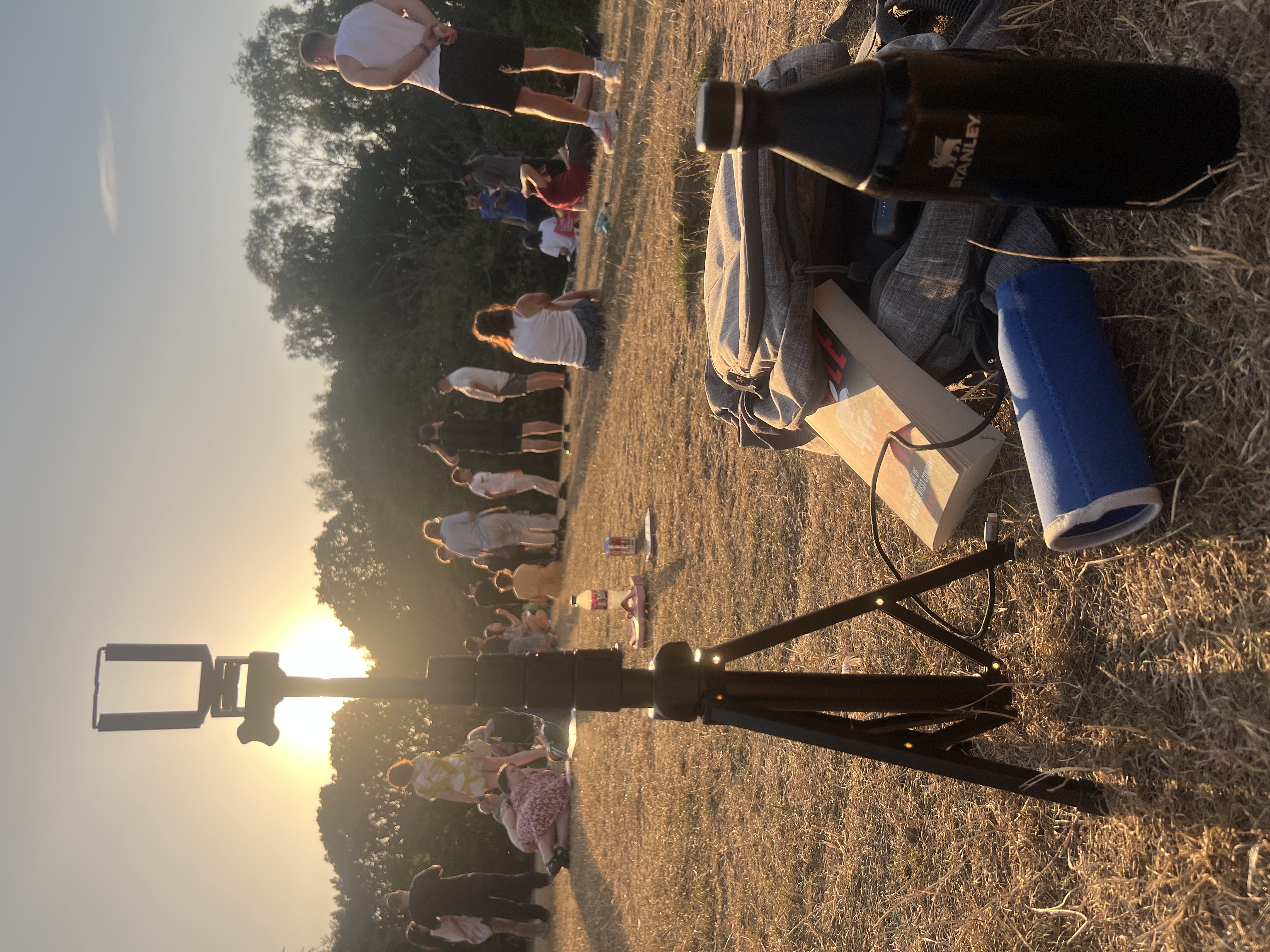
With my naive and unplanned self, I took nothing with me that would have been any use. I brough some sunglasses, my phone and tripod, a bottle of water, and a book to pass the time waiting. Crucially, no eclipse glasses, until today I thought they were just tacky sunglasses that were cheap enough to be given out for free.
After all, why would I need any more than this!! RMG cited that Manchester and Liverpool would have around 90% obscuration of the sun. In my mind it should've gotten really dark, the sun only visible partly (10% partly), and the entire thing would've been a spectacle.
Oh how i was wrong.
What actually showed up to the naked eye was... nothing. I looked up with my sunglasses on and saw, well, the sun. If nobody had told me there was an eclipse today I wouldn't have known. There was no blockage at all! Let alone 90% of the damn thing!
When I got my camera out to try and capture the thing -- after all, this should've been the 'peak time' for the eclipse -- i saw another whole load of nothing. Frantically lowering the focus brightness did next to nothing, it took going into video mode (for some reason) with these focus tricks before anything showed up.
About, a third of the sun was covered? Maybe a bit less? I was entirely perplexed and felt lied to, I was specifically told - we were all specifically told that 90% of the sun was going to be out of sight!
(90% obscuration, properly, means 90% of the sun's area covered. Not some vague diameter measurement, not a rough approximation. A proper thin sliver left over, not the fat bite i was looking at.)
Look, look at this photo from 19:10:03. Literally bang on the dot of the predicted maximum. It's clearly not a 90% crescent.
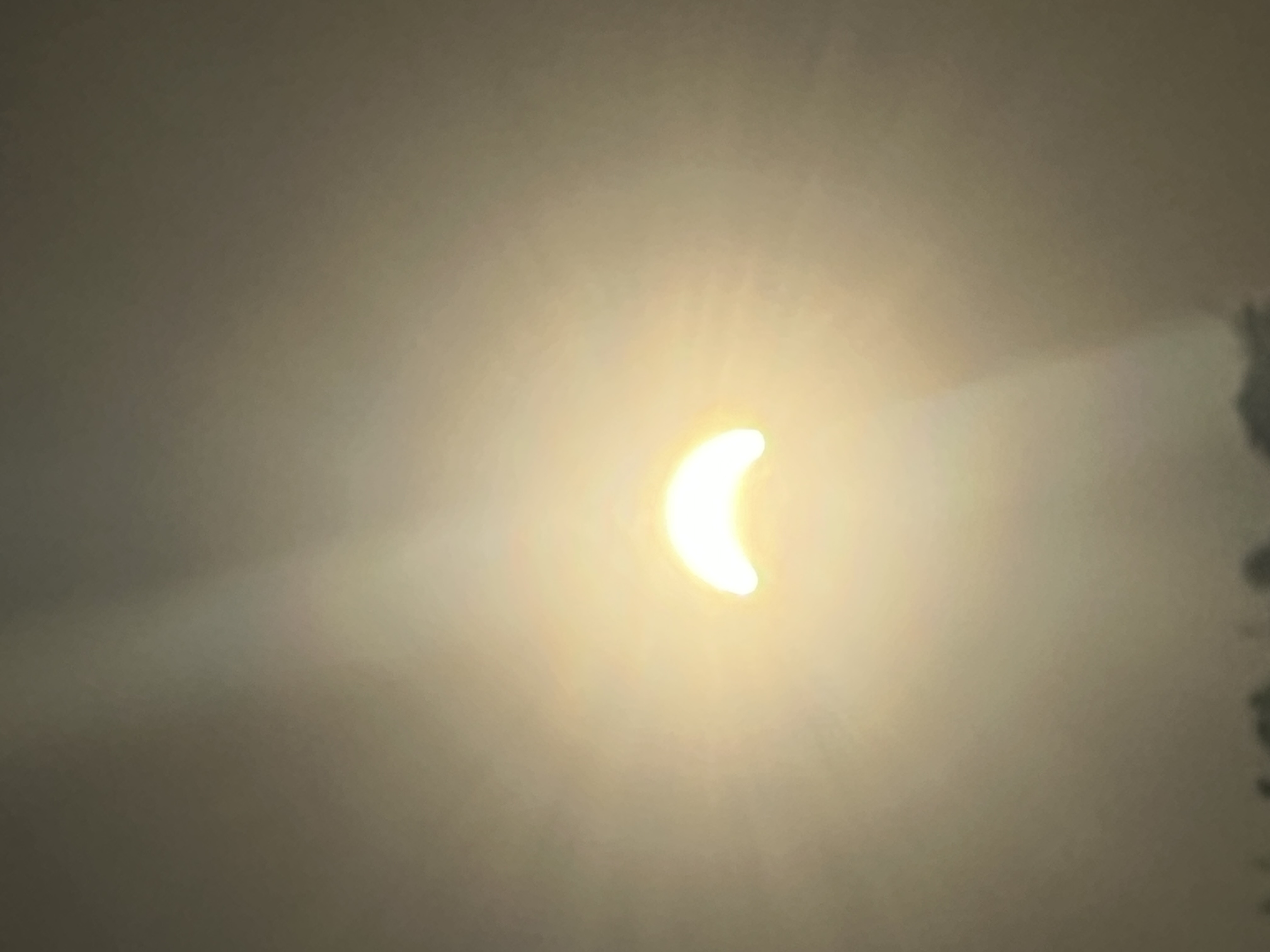
Look at this way better photo, from 19:18. It still isn't a 90% crescent! It doesn't illustrate my point for this post, I just think it's a better photo.
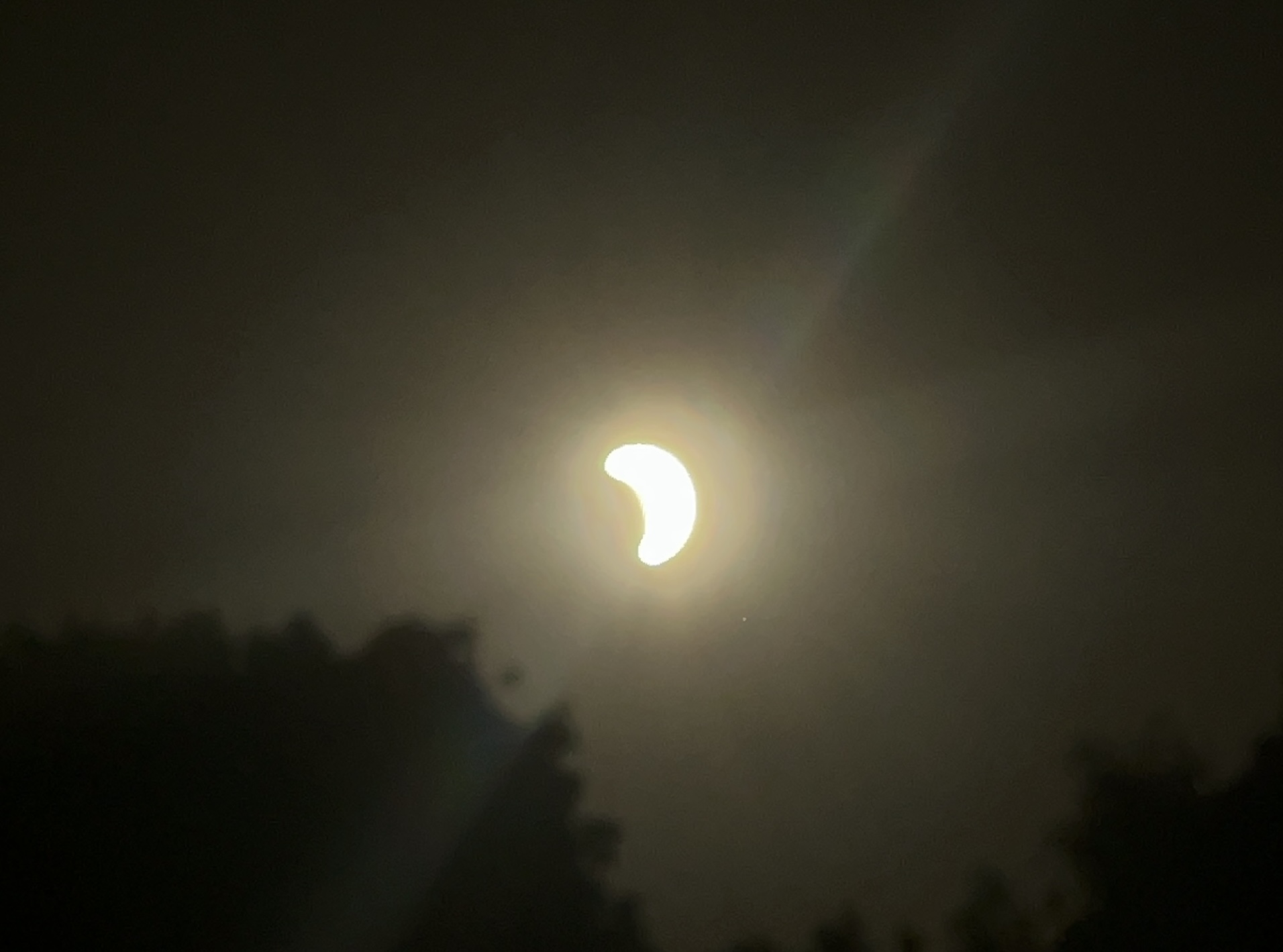
So whats going on here??
Nerdy camera nerd talk for nerds
Well. In one of my photos i think i've found the answer, and it's caused me to realise that eclipse glasses aren't just cheap sunglasses that can be given away for free. I dont think i've ever actually worn one.
The image below shows a big blown-out overexposed sun, no sign of an eclipse here. However there is a small, separate, green crescent elsewhere in frame. This is what I have learnt is called a 'lens ghost', a secondary internal reflection phone lenses throw off of something this bright.
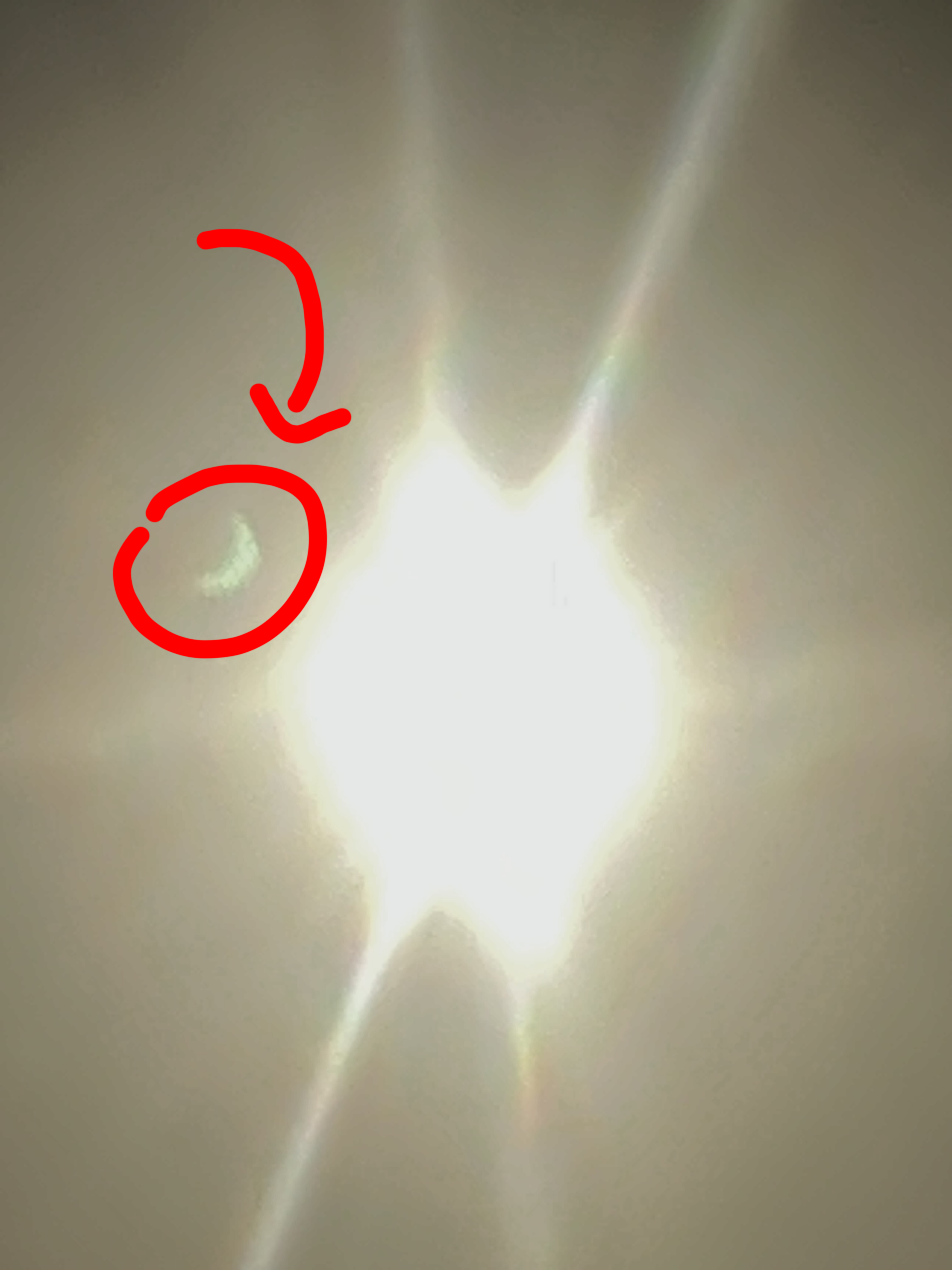
So then, what's that? A phone lens isnt one piece of glass, its a stack of five or more elements and every single glass-to-air surface in that stack reflects a small slice of whatever light hits it, even with anti-reflective coatings on. Normally that lost light goes nowhere and you never notice; point the thing at something as violently bright as the sun though, and those tiny reflections stop being ignorable. Every so often light bounces off two of those surfaces in just the right sequence to refocus and land back on the sensor as a second, much fainter copy of the sun, usually shifted off to one side and usually tinted because the coatings are tuned to kill reflections at specific wavelengths and whatever slips through comes out green or purple. Thats the ghost in the photo above!
Why does that ghost show something truer than the real image right next to it?? Because each of those bounces throws away most of the light. By the time it lands on the sensor as a ghost its maybe a hundredth, maybe a thousandth as bright as the actual sun sat two inches away in the same frame. Dim enough to actually fit inside what the sensor can record properly, instead of maxing it straight out.
Which is also the answer to why the main image only showed about a third covered, and I dont think 'blooming' on its own quite covers it. It's not that the crescent grew fatter, its that the same stray light bouncing around inside the lens doesnt just form one clean ghost off to the side, it also fogs the area right around the real sun -- a real, named thing apparently, veiling glare. That fog lands right on top of where the moon should have been sat as a hard black edge. The sensor should read that bit as properly black, moon blocking 100% of the light there, but a little bit of scattered light landed on it too, and that was enough to drag it back over the 'this pixel counts as lit' threshold. So the edge of the 'sun' in my main photo was never actually the edge of the moon, it was just the point where the scattered light happened to fade out.
Sorry for ruining the magic if you too got an eclipse photo today.
So: the eclipse itself was exactly as advertised. The phone camera just can't render something that bright without the stray light inside its own lens fogging the shot, and that fog eats into the crescent shape and makes it look far less eclipsed than it is...
Here's another example of this behaviour. At the start of it you can see the green flare flying around as i hastily pan to the sun whilst trying to avoid videoing people. That's (apparently) more true to what the media meant than the bite taken out of the sun visible afterwards.
So was it 90%??
Yeah.. It was there the whole time. If i'd bothered getting actual eclipse glasses like a normal person, i probably would've stood in that park and watched the sun genuinely vanish down to a sliver, same as everyone was promised. Instead i spent forty minutes trying to photograph nothing, on a phone that flatly could not cope with how bright the sun is, and only worked out what actually happened afterwards digging through a lens artifact i didn't even know i'd photographed.
Lesson learned: dont trust an unfiltered phone photo of an eclipse. Ever. For the next one of these that happen i'm buying the glasses first, or atleast finding a watchparty-place that gives them away for free.
Atleast I had an excuse to go to the park.
Thank you for reading.
- Dia
That's it, by the way. The blog post is done.
All that follows are some utterly brilliant eclipse photos taken from all around the North West. Enjoy!
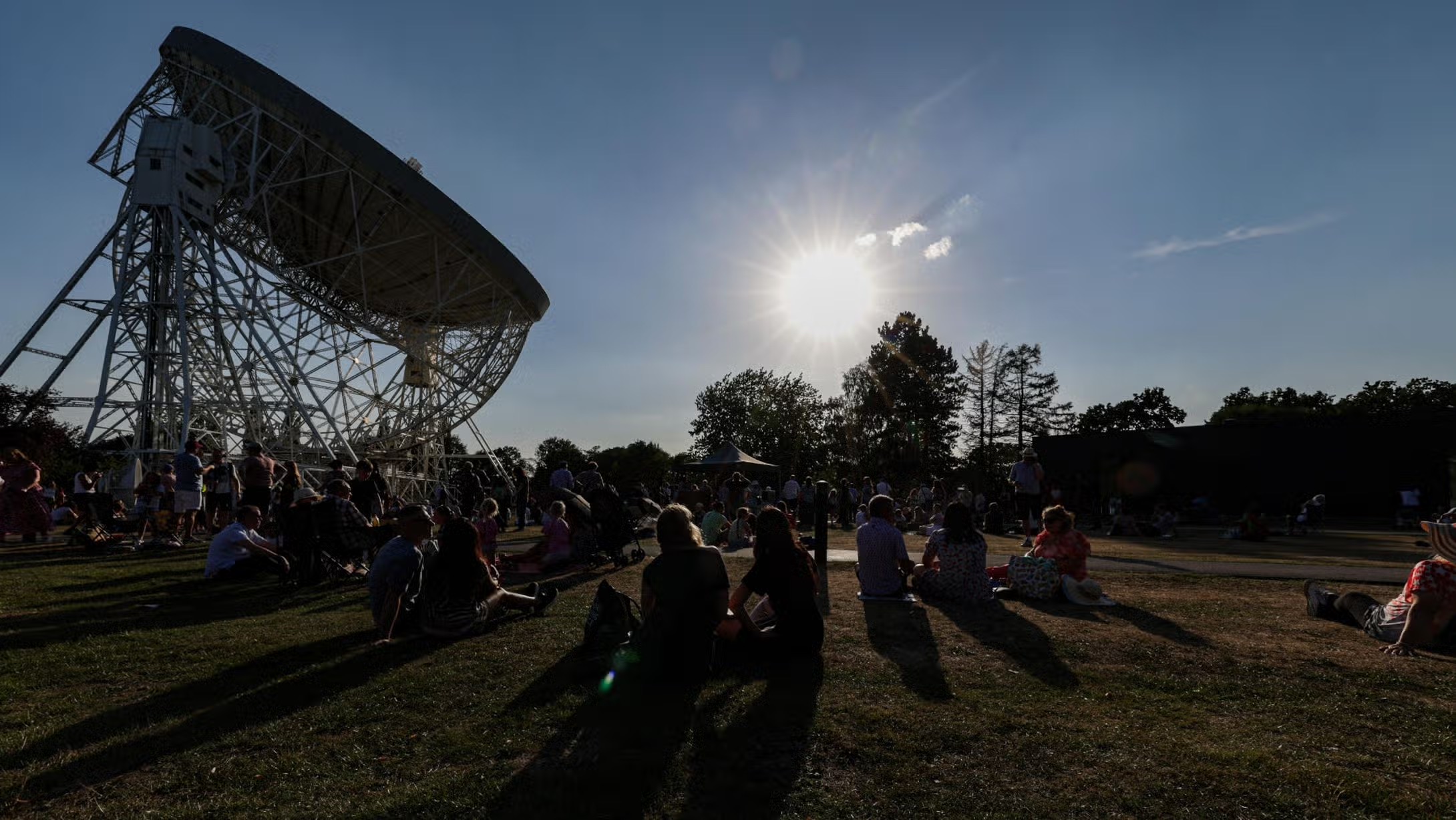 kenny brown, jodrell bank. sourced from manchester evening news.
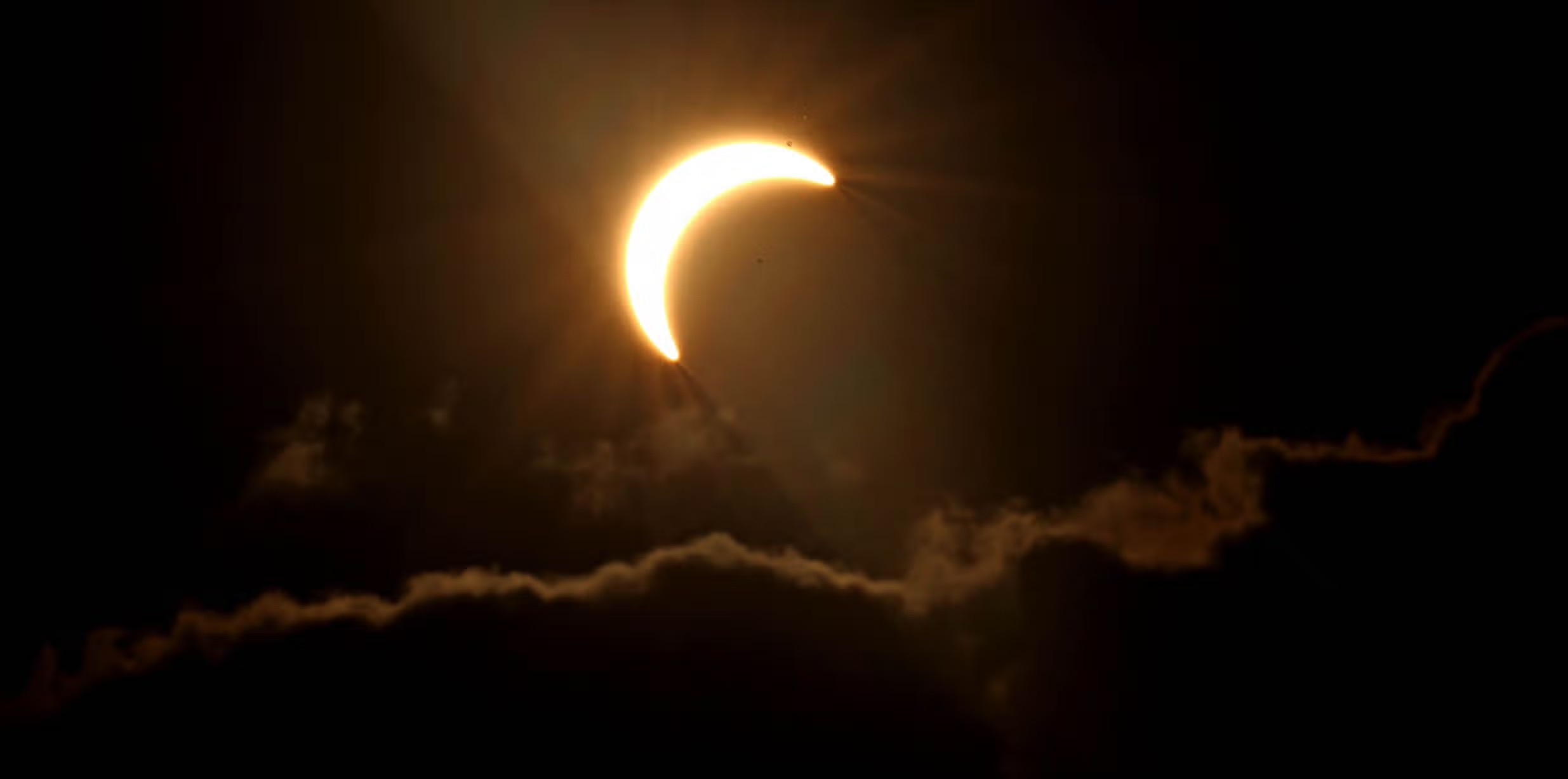 jason roberts, from merseyside. sourced from manchester evening news.
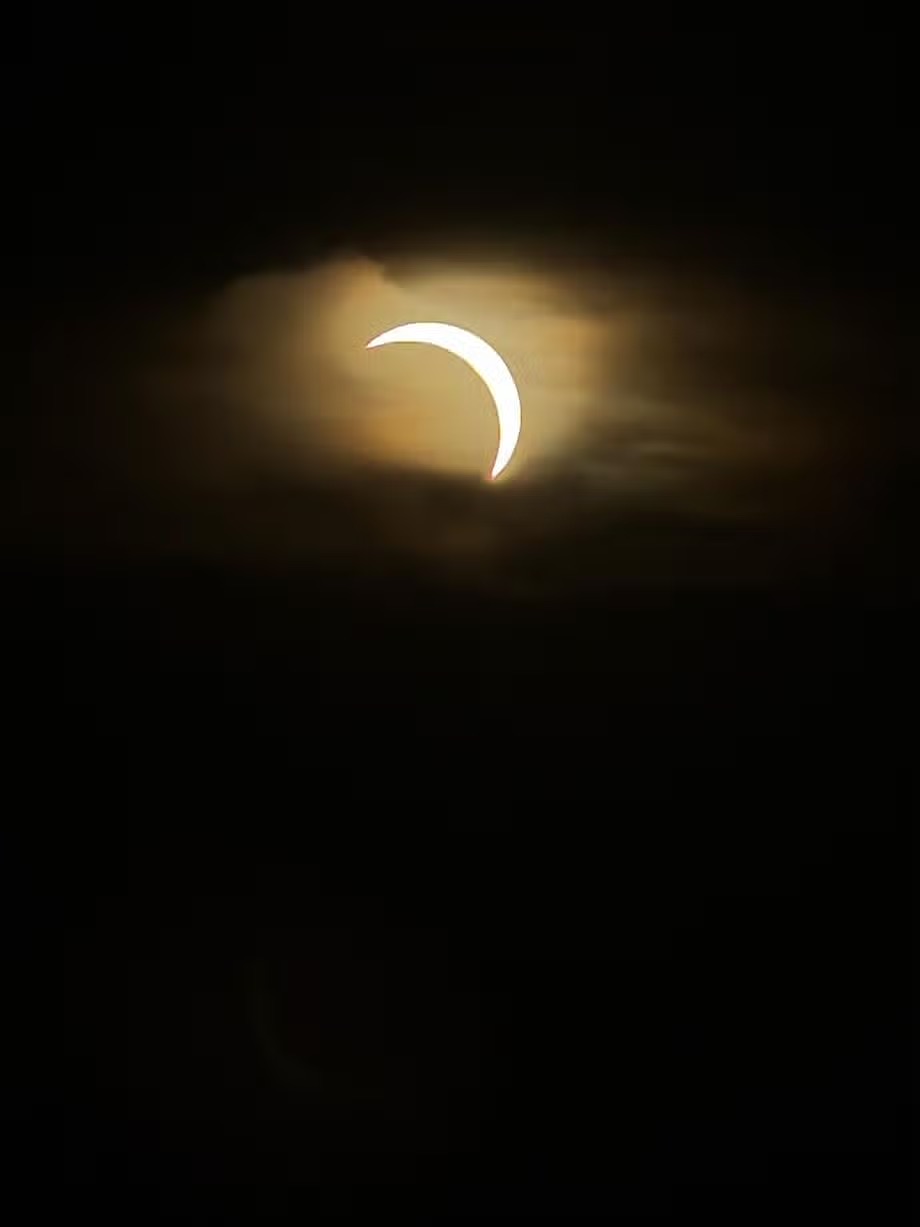 photographer unknown, from rossendale, lancashire. sourced from manchester evening news.
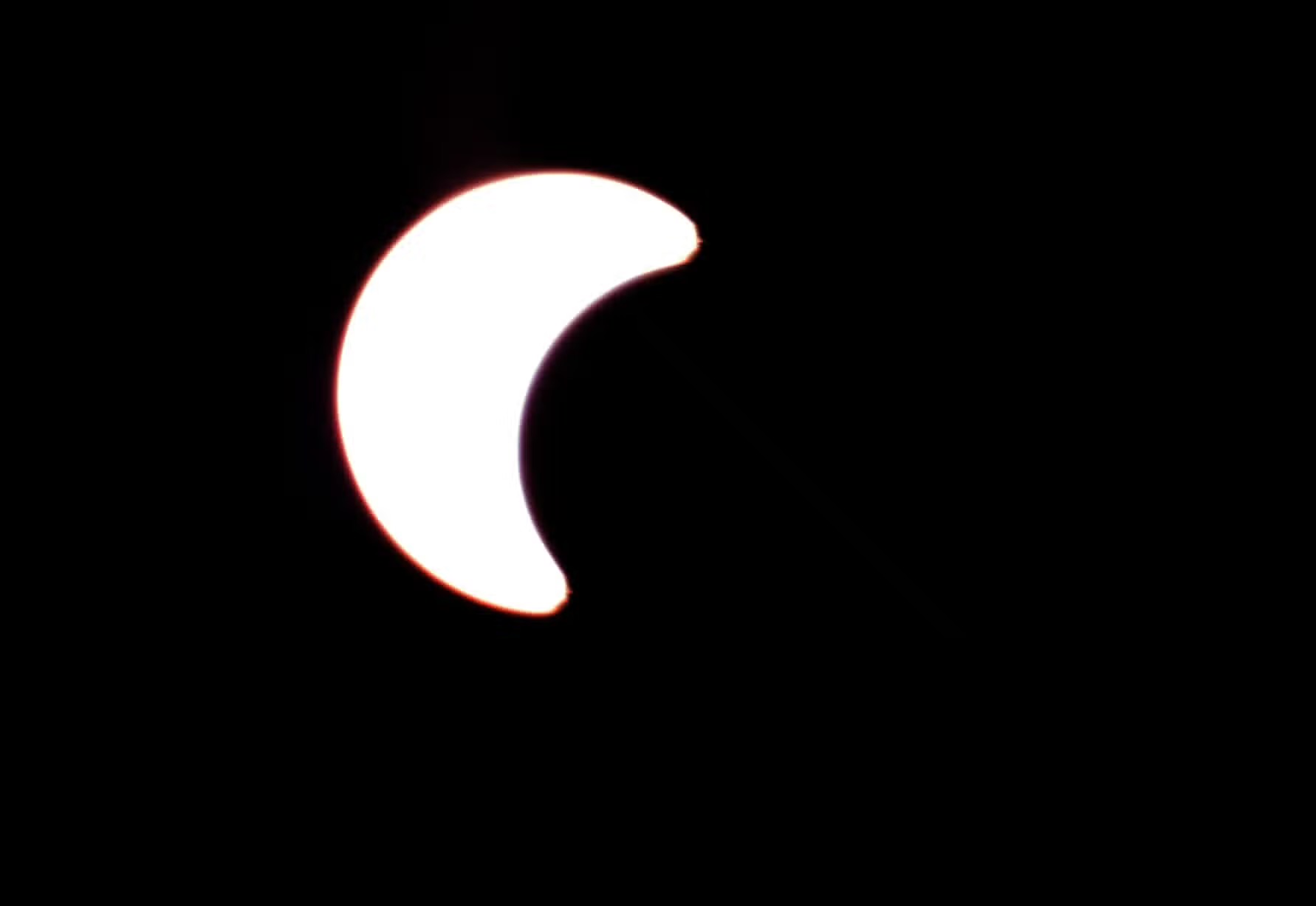 collin lane, from liverpool. sourced from the liverpool echo.
one last thing. the meteor showers i mentioned at the start of the post? unreal. by about 10pm they filled up the night sky, i've never seen so many in my life. apologies if you missed them! they got very overshadowed by the eclipse, pun intended.
goodnight readers!